
Vietnam is like a long geographical poem stretching over 1,600 kilometres, between misty mountains, golden beaches and bustling cities where scooters seem to be leading their own revolution. From the Mekong delta to the misty north of Sapa, each region is an adventure in itself, a universe in its own right. Here, you can walk through rice paddies suspended like staircases to the sky, get lost in markets where durian rubs shoulders with blue crabs that are still alive, and share a bowl of pho at dawn while talking about the weather with retired badminton enthusiasts.
Vietnam is not a frozen postcard: it's an action film, a romantic comedy and a social documentary... all at the same time. Between the imperial remains of Hué, the karst caves of Halong and the confidential beaches of Phu Quoc, the country whispers just one thing in your ear: "Take your time, and taste everything, even the stuffed snails." Get ready for an intense, sensitive and wildly exotic journey.
Arriving in Vietnam
Getting to Vietnam is easy... and downright exciting. There are three international airports: Hanoi (in the north), Ho Chi Minh City (in the south) and Da Nang (in the centre). Emirates, Qatar Airways, Vietnam Airlines, Air France - many airlines will drop you off, often with a stopover worthy of the name (and a dubious foam cushion). Once there, you'll be greeted by a chorus of horns that would make any techno festival pale into insignificance.
To get around, forget maps: scooters are king. In Hanoi or Saigon, crossing a street is like active meditation. You close your eyes (not too much), move forward slowly, and let the scooters organise themselves around you in a kind of intuitive ballet worthy of the Bolshoi. Buses are plentiful and cheap, trains are slow but romantic (especially on the coast), and domestic flights are handy for covering long distances - especially if you value your spine.
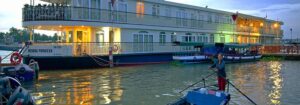
And then there are the boats, on Halong Bay or the Mekong Delta, the sampans, the pirogues... in short, here you get around as you live: with imagination, with patience, and sometimes with a little water in your shoes.
Choosing accommodation in Vietnam
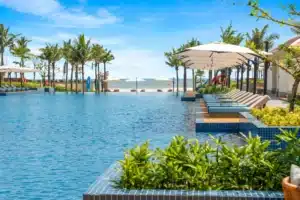
Sleeping in Vietnam means choosing your level of poetry: from a bamboo hut on stilts to a seaside resort with an infinity pool overlooking a sea of oil. In Hanoi and Saigon, boutique hotels vie with each other in charm, often housed in colonial buildings transformed into arty havens. In Hué, some hotels welcome you like royalty, with period furniture, free-standing bathtubs and views of the Perfume River - nothing less.
On the coast, seafront bungalows await you with hammocks, fresh coconuts and staff with more smiles than an emoji on holiday. And in the mountains of the north, in Sapa or Ha Giang, guest houses offer nights in the homes of local people, respecting traditions and often to the sound of the morning rooster. It's a chance to get to know people like the Hmong or the Red Dao, in an atmosphere of genuine sharing, including soup.
The real luxury in Vietnam? Sleeping in places that smell of wood, lemongrass and memories to come.
Vietnamese gastronomy
Vietnamese cuisine is an explosion of freshness, a poem of herbs and a demonstration of balance. Vietnam can be eaten standing up, sitting on a plastic stool or squatting on the pavement - but always with passion. Visit phothe national soup, comforts souls and stomachs. Visit banh mi - French-Vietnamese heritage - crunchy baguette and inventive filling. The spring rolls are so fresh that you feel like you're eating a salad rolled in rice bisou.
Markets are sensory labyrinths where you taste, bargain and sometimes don't even know what you're eating... but it's delicious. In Hoi An, you can enjoy cao lauin Hué from bún bòand in the south, the hu tieu reigns supreme. Then there are the more... surprising experiments: incubated eggs (balut), fried frogs (literally), and pineapple pork pies. Yes, Vietnam takes you far away. But always with a bowl of fragrant rice.
Tourist attractions in Vietnam
From north to south, Vietnam offers a range of landscapes and cultures as varied as a floating market on a festival day. In the north, the Sapa region unveils its rice terraces like green staircases to the clouds. Halong Bay, meanwhile, plays the absolute romantic card, with its karst sugar loaves rising from the waves like slumbering dragons.
In the centre, Huế and Hội An are architectural gems: one imperial and meditative, the other colourful and festive, lit up every evening by floating lanterns. And further south, the Mekong delta unfurls its canals, its markets on the water, its boats full of pineapples and river poetry.
And of course there are the cities: Hanoi, with its filter cafés, discreet temples and mysterious lakes. Saigon, with its crazy energy, its skyscrapers popping up between two pagodas, and its impromptu horn concerts. Vietnam is not a country to visit, it's a stage to cross.
Activities and entertainment in Vietnam
Vietnam can be discovered as much by day as by night, and sometimes the border between the two becomes blurred. In Hanoi, traditional puppet shows on water have captivated young and old alike for centuries: the puppets emerge from the pond as if by magic, accompanied by folk music and songs recounting the country's founding myths. In the evening, the trendy café-concerts in the old quarter play host to young Vietnamese musicians who mix local pop, international covers and traditional instruments such as the đàn bầu. In Saigon, it's all about electric energy: rooftop cocktail bars with breathtaking views, intimate jazz clubs and popular karaoke bars where people sing from morning till night. When it comes to nature, Vietnam has plenty to offer: hiking in the rice fields of Sapa, trekking in Cat Tien national park, cycling in the countryside of Hội An or night cruises on Halong Bay. Sports enthusiasts try their hand at kitesurfing on the waves of Mui Ne, diving in the waters of Nha Trang or rock climbing on the karst cliffs of Cat Ba. Here, each day ends with a sense of adventure, and each night opens a new chapter of discovery.
Vietnam shopping guide
Shopping in Vietnam means entering a world where the art of negotiation is almost a national sport. In the markets of Hanoi and Saigon, the stalls are overflowing with colourful fabrics, light-as-air silks, rattan bags and handcrafted jewellery. Hanoi's old town features entire streets dedicated to a single product: the bamboo street, the silver street, the votive paper street... a unique medieval heritage. In Hội An, the undisputed capital of made-to-measure, tailors and seamstresses work day and night to make you perfectly fitted dresses, suits or shirts, sometimes delivered within 24 hours. In the Mekong delta, the floating markets offer a surreal atmosphere: boats laden with exotic fruit, vendors hailing their customers with bamboo poles, and transactions made as the water flows. Food lovers won't leave empty-handed: robusta or arabica coffee, lotus tea, cinnamon sticks, sesame nougat, nuoc mam fish sauces. And of course, the emblematic souvenir is the conical hat, a simple everyday object that epitomises the Vietnamese soul.
Diving into Vietnamese culture
Vietnamese culture is a constant encounter between the ancient and the modern. In the incense-scented pagodas, the faithful come to make offerings of flowers and fruit, in respectful silence punctuated by the sound of the temple gong. In the countryside, village festivals come alive with lion dances and cockfights, while craftsmen perpetuate skills handed down from generation to generation: Bat Trang pottery, Ha Thai lacquerware, brocade weaving by ethnic minorities. In the museums of Hanoi and Hué, visitors can discover a history marked by resistance, colonisation and independence, told with pride and emotion. But Vietnam is also a connected and creative youth: students improvising badminton at dawn around Lake Hoan Kiem, young designers opening conceptual cafés in old colonial buildings, TikTok influencers reinventing street food with viral videos. Between memory and modernity, the country retains a unique identity, where ancestral traditions and urban innovations intertwine on a daily basis.
Calendar of events in Vietnam
Vietnam beats to the rhythm of its festivals, true collective breaths where joy is expressed in the street. Visit Tet (Lunar New Year) is the most eagerly awaited time of the year: at the end of January or beginning of February, families get together, houses are decked out with peach blossoms and kumquats, and millions of firecrackers explode in an atmosphere of renewal and hope. The Mid-Autumn FestivalIn September, children are enchanted with parades of multicoloured lanterns, sweet mooncakes and lion dances that light up towns and villages. Every month, the Hội An Lantern Festival transforms the old city into a fairytale setting, with hundreds of lights floating on the Thu Bon river. Every two years, the Hué Festival celebrates the imperial heritage with dance performances, historical re-enactments and concerts in the citadel. Finally, the Perfume pagoda pilgrimageThe spring festival attracts crowds of devotees who climb the mountains in search of spiritual blessings. These festive moments give travellers a rare window onto the Vietnamese soul: generous, colourful and deeply attached to its traditions.
Vietnam: much more than just a trip
Going to Vietnam means accepting to lose your bearings in order to find new ones. It's learning to cross a street in the middle of a stream of scooters, savouring a steaming pho on a Hanoi pavement at 6am, chatting to a Mekong fisherman who tells you about his days spent between sky and water. It's letting yourself be caught up in the mist that covers the mountains of Sapa, smiling at the delicate lanterns of Hội An, or being moved as you discover the remains of Hué and the still visible scars of recent history. Vietnam is not just a tourist destination: it's something to be experienced, tasted and shared. You leave with a flood of memories, flavours on your tongue, and often an inner promise to return one day, because Vietnam is one of those countries that leaves an indelible mark.